
━━ SAFETY ASSIST · DOMESTIC VIOLENCE
It doesn't have to happen at work to affect someone at work.
An employee is dealing with an aggressor. It is affecting their safety, wellbeing or ability to work.
Management needs to know what happens next.
━━ THE EVIDENCE
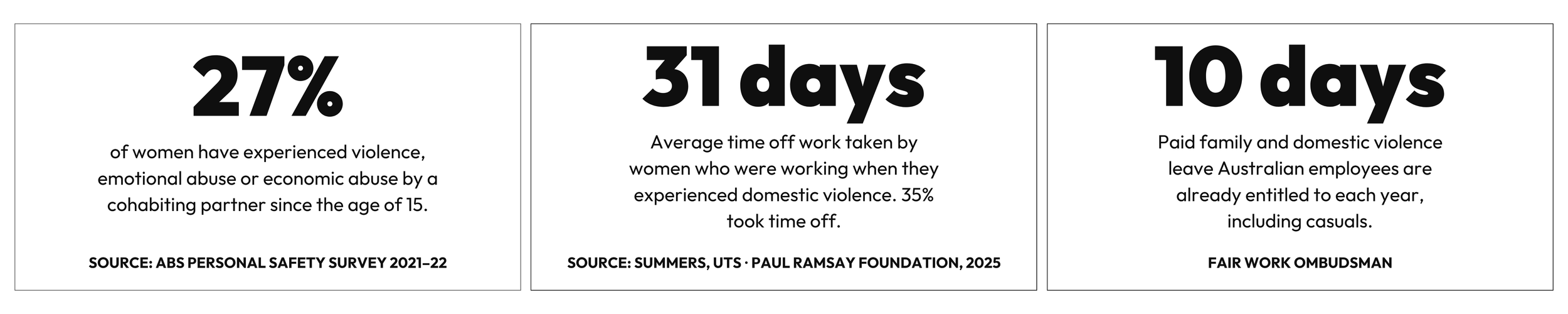
The workplace connection already exists.
This is not an emerging issue that needs a case made for it. It is already in the data, and it is already in your payroll system.
━━ WHAT THIS CAN ACTUALLY LOOK LIKE
She hasn't slept.
Her cards have been cancelled.
Her phone is being monitored.
She keeps disappearing to take calls.
She is frightened about what happens when she leaves work.
Her work is changing.
Her manager knows something is wrong.
What happens next?
━━ THE RESPONSE GAP
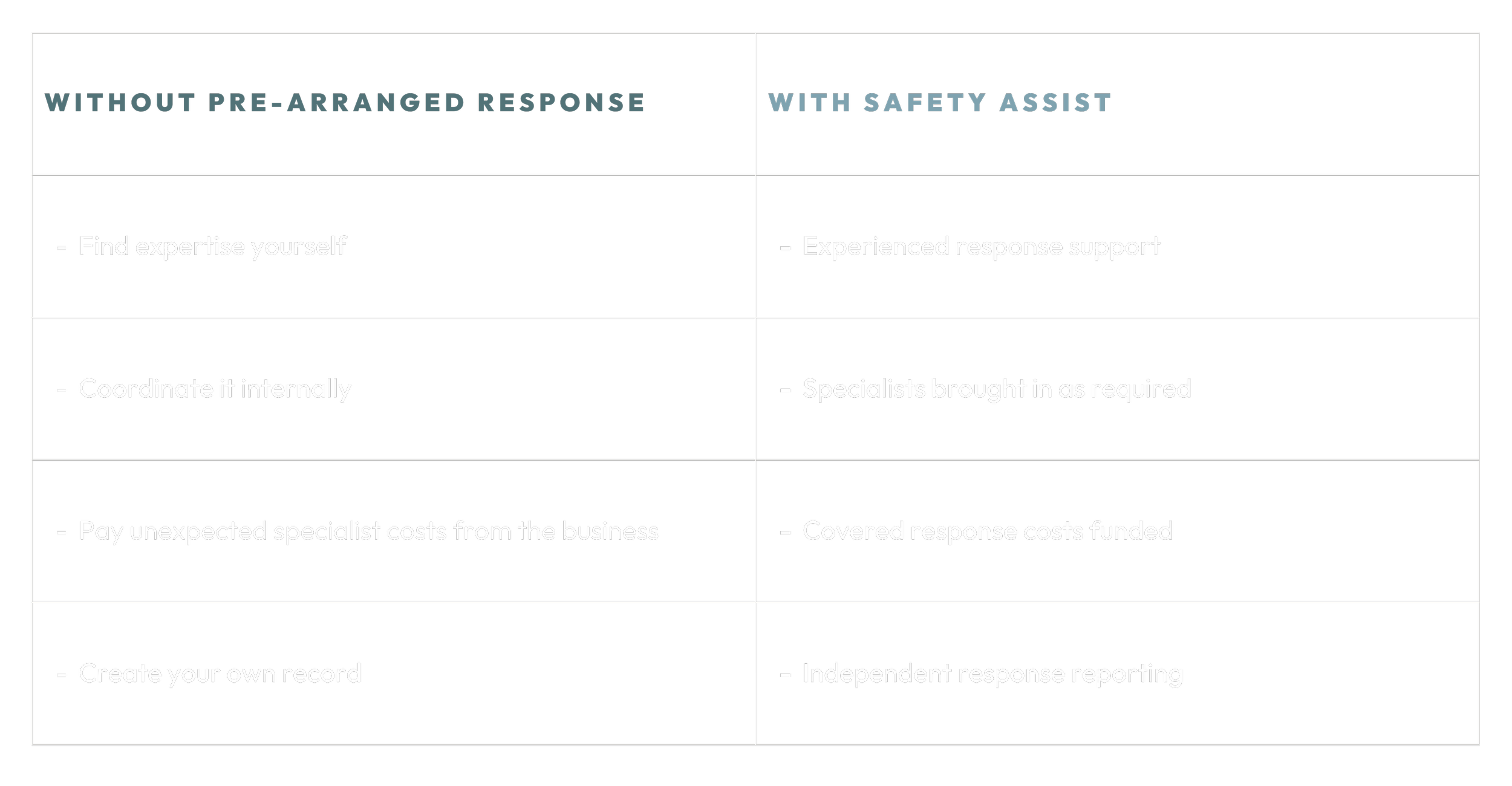
Your organisation probably has all three of these already.

Who manages the situation?

Safety Assist responds where a person poses a threat, including stalking, intimidation and behaviour that places an employee in fear, whether or not it occurs at the workplace. Cover is subject to the terms, conditions, limits and exclusions of policy wording SSA-L-02.
━━ WHEN SAFETY ASSIST IS ACTIVATED
From the moment someone makes the call.
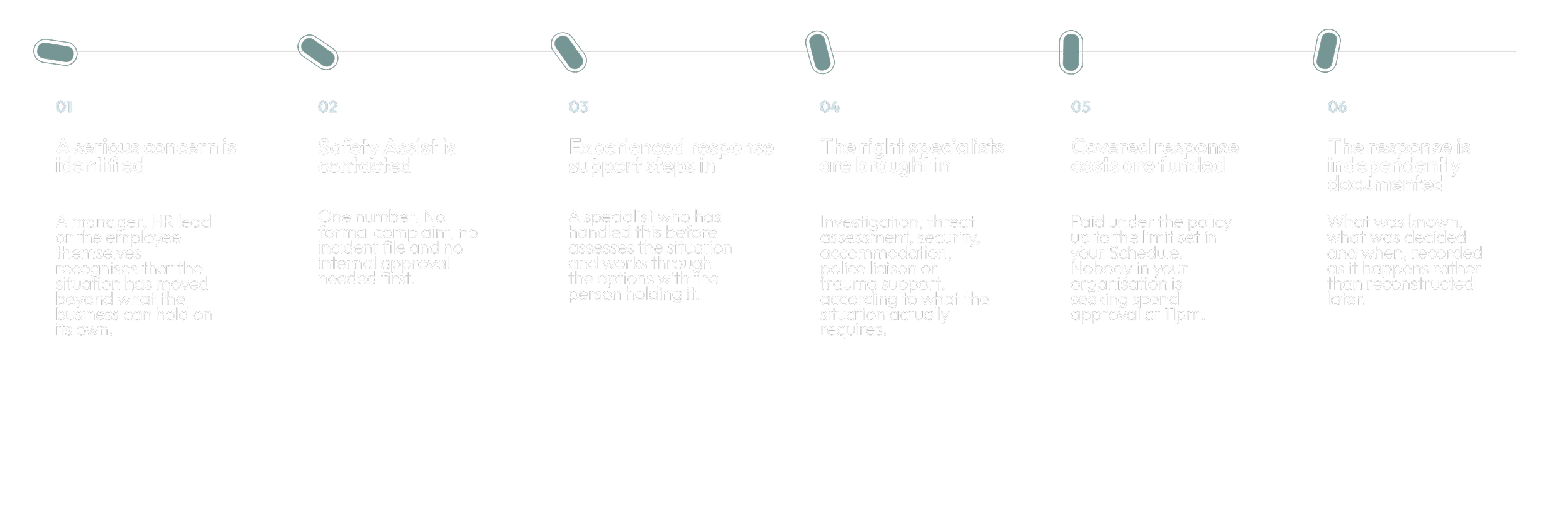
Your manager does not have to know what to do. They only have to know who to call.
Response services are provided under policy wording SSA-L-02 and funded up to the limit set in your Schedule, subject to the terms, conditions and exclusions of that policy.
━━ WHAT THE BUSINESS GETS
Response. Funding. Governance.
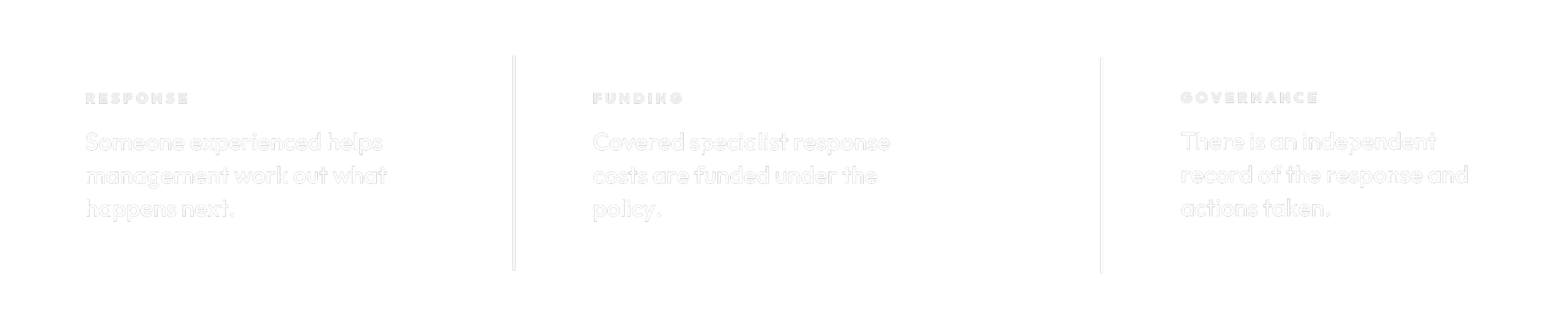
What happened?
What did we do?
Where is it recorded?
━━ EMPLOYER READINESS CHECK
If an employee disclosed domestic violence tomorrow.
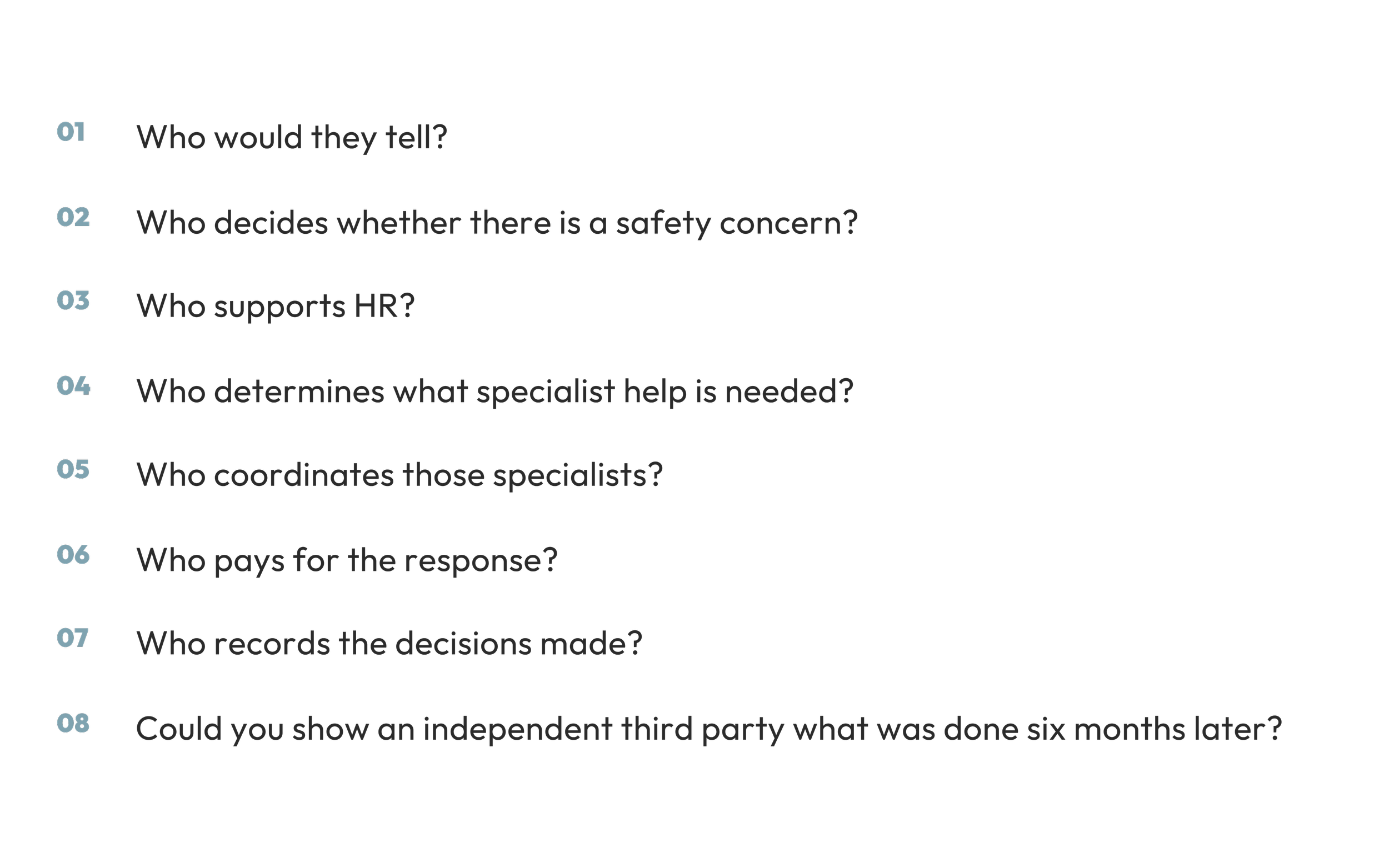
If those answers aren't immediately clear, that's the gap Safety Assist is designed to fill.
━━ COMMERCIAL EXPOSURE
What can one poorly managed incident cost your business?
Not every cost below will occur. That is exactly the problem: without a pre-arranged response, you cannot know in advance which ones will.
Paid absence · Backfill and overtime · HR management time · Executive management time · Legal advice · Security · Investigation · Specialist consultancy · Employee turnover · Recruitment · Retraining · Team disruption
Subject to policy terms, conditions, limits and exclusions. A Response Cost Exposure tool is in development.
Take something with you.
━━ RESOURCES
MANAGER QUICK GUIDE · 2 PAGES
"I think something is wrong."
What to notice, what not to try to diagnose, what to escalate and where to get help.
Written for a manager who can see a serious problem and has no idea what they are allowed to do about it.
WORKSHEET · 1 PAGE
Employer Readiness Check
A printable version of the eight questions above, sized for a leadership, WHS or risk committee meeting.
RESPONSE MAP · 1 PAGE
What Happens Next?
A realistic scenario shown end to end, with what changes at each stage when Safety Assist is in place.
EXECUTIVE BRIEF · 2 PAGES
The response gap, for a board
Prevalence, work impact, the response gap, and response plus funding plus governance. Written to be forwarded rather than presented.